Good Morning Hull
/
You can say what you like about going up town first thing in the morning to review the newspapers for BBC Radio Humberside, but it does mean that you can be around to get some nice pictures.
You can say what you like about going up town first thing in the morning to review the newspapers for BBC Radio Humberside, but it does mean that you can be around to get some nice pictures.
This was our work area. Keith is posing with a rather nice multimeter. We had the camera in the middle of the table and cupboard (full of sweets), kettle (borrowed jug) and sink (we had everything but the kitchen sink it turned out). The tracking could tell which of the locations you were standing at, and also when you were moving. You can see a horrible, but mercifully short, video of it mostly working here. When the outline flashes white it means that the person has been detected at a location.
Once we had something working it was time to make a presentation in the event that we made “top five” and had to present to the finalist judges. We put together a quick bit of PowerPoint and then dropped it onto my elderly (but still working fine) Surface Pro 3 ready for use.
Turns out we were picked first to present, which was great fun. We didn’t win though, which is not surprising when we saw what the other four teams had been doing. Some lovely presentations, some great ideas and huge chunks of enthusiasm. The winner has a fantastic solution to the issue of “sunsetting”. The great thing about the solution is that the path to deployment is well established and so I’m really looking forward to seeing it go out there. If you’re interested in my horrible code and presentation you can find them on GitHub here. I’m going to have a go at replicating the behaviour using an ESP32 camera.
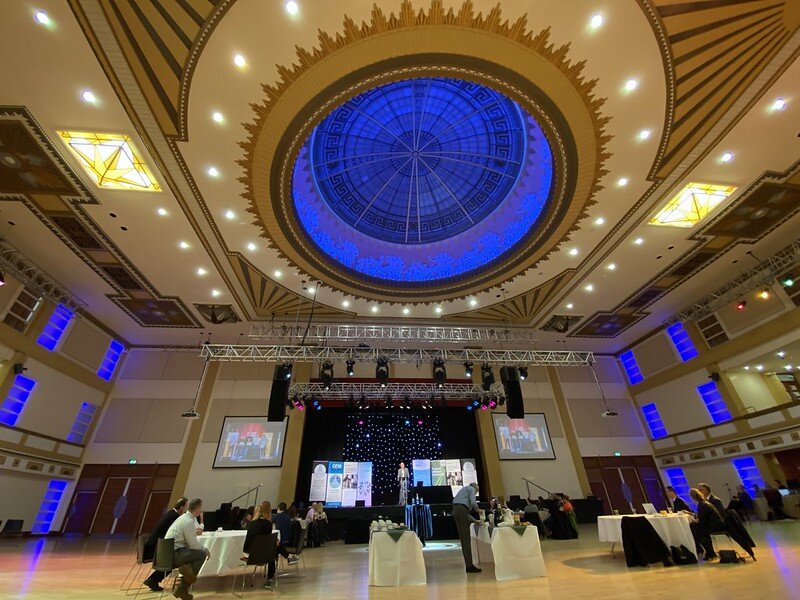
I’ve put some pictures on Flickr here. They include the all important “firework” shot of the winners getting their richly deserved prize:
Huge thanks to the team for organising another excellent event.
..the tech challenge spaceship is landing…
The Humber Care Tech challenge is becoming a highlight of the year for me. I hope they have one next year. The idea is simple enough: Take a problem faced by healthcare professionals and then turn a bunch of techy folks loose to make things better. This year the theme is patients with Alzheimer and related conditions.
The scope of the problem was nicely illustrated by the range of ideas that have emerged. There are 14 teams here today working away and all of them are working on different aspects of the condition, from creating apps to help carers, to helping with shopping, to building reminiscence systems.
Keith and I are working on a system that tries to track the user performing simple processes. The one we’ve chosen is making a cup of tea. We’ve boiled this down (see what I did there?) to movement between a number of fixed kitchen locations (kettle, sink, cupboard etc) and our application will profile the activity in terms of movement between those locations. Once we have observed sufficient repeats of the activity we can detect changes and also detect when someone is having a bad day.
We are starting with my awesome OpenMV camera with a view to migrating to the ultra-cheap ESP32 Webcams and maybe even a thermal camera.
The Open MV environment is wonderful. I’ve not done much image processing before and this is a perfect way to get started. You write the code in Python and then push it into the camera which then runs it. The library is comprehensive and very easy to use. And it runs really quickly.
I’m trying to keep the algorithm silly simple so that it can be made to run on very constrained devices. Essentially I’m using the camera as a glorified PIR sensor. I’m not very proud of the code that I’ve written, but I’m rather proud of the fact that it seems to work.
Keith and I are taking part in the Humber Care Tech Challenge tomorrow. We’re hoping to do something with image processing so I’m filling my bag with cameras and gadgets.
Really looking forward to it.
This is our last day. This is a lovely place to do nothing. Tonight we have to fly back and start doing things again…
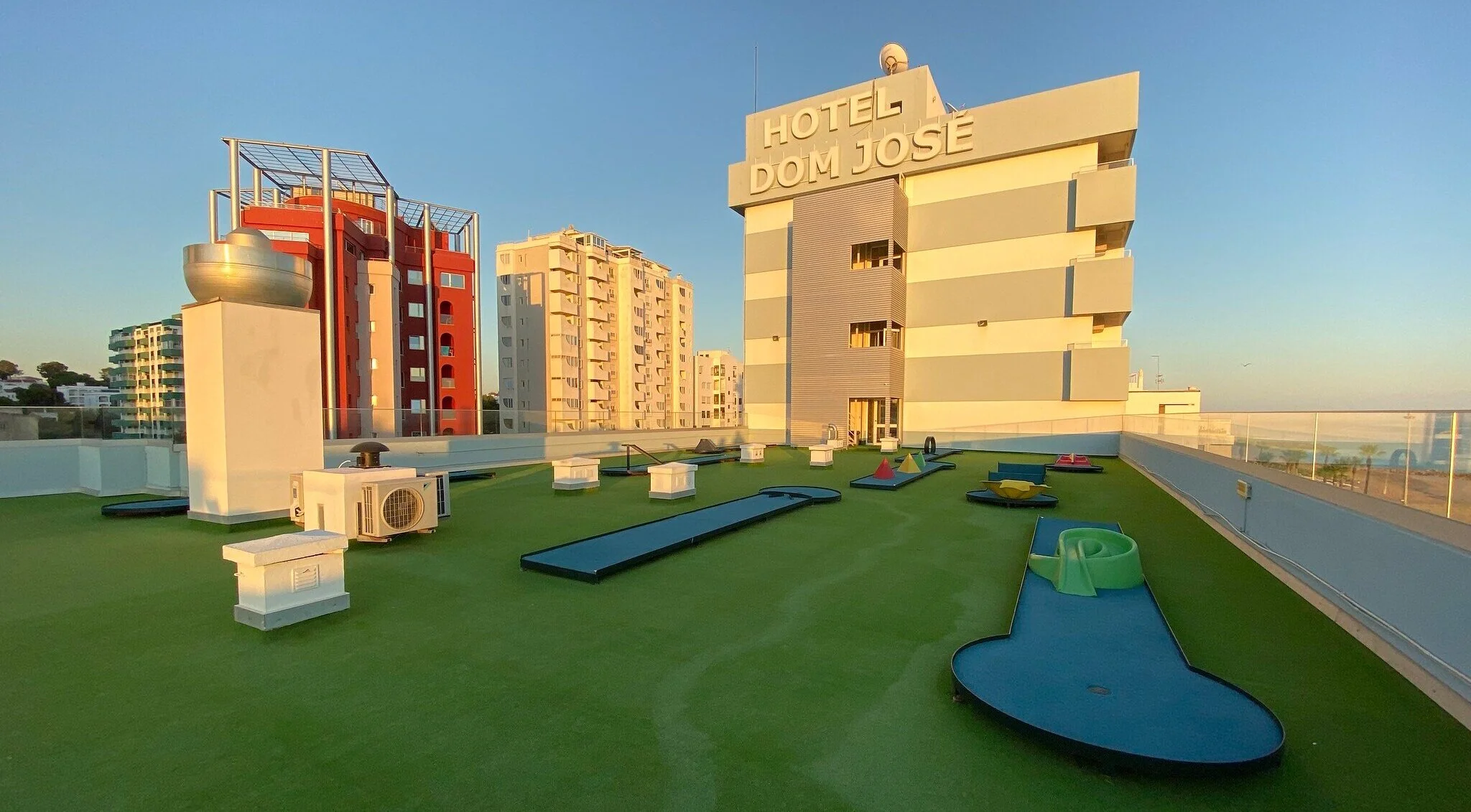
The weather is persistently nice. And they have crazy golf course on the roof of the hotel. I wonder how many balls they lose each year?
I don’t own a boat. They look nice, but apparently they involve going out on the water and getting wet and stuff. Although I guess if you can afford to buy one of these you can also afford to pay someone to do all that for you.
As promised.
We’ve flown off for a few days in Portugal. Very nice.
Expect lots of pictures of sunsets.
As promised, I’ve released my PAX counter display code into the wild on GitHub. You can find it here. It was great fun to make, works quite well and would be useful for anything where you want to bind an easy to read display to an MQTT event.
I really, really, fancy building a LED cube. I’ve been playing with LED panels as I make my PAX counter display and I think it would be an awesome thing to have a go at.
Does anyone know where I can get some cheap panels? And a big power supply. And a bunch of batteries….
Number one son has spent a big chunk of the day playing Zelda - Link’s awkening on his Switch. As well he might, it is very good.
Yesterday I went to a wedding and found a bolt in my trouser pocket. Very strange. Today I remembered why. The last time I wore my suit was at a Humber Care Tech Challenge communications event near the Humber Bridge. Because it was supposed to be posh the suit came out. Then, on the way back I stopped off to buy some bolts for holding air quality sensors to lamp posts. The one in my pocket was the pattern that I took along to make sure that I get ones that match.
Went to a wedding today. Put my suit on for the first time in a while and found the bolt above in my trouser pocket. I’ve no idea why it is there, or what it is for. Strange.
Anyhoo, it was a great wedding and the best of luck to Nina and Sam.
I’ve had a soft spot for the m5stack devices ever since I found them on AliExpress a while ago. They are really well packaged ESP32 based devices with high standards of production and design and a wealth of different add-ons and configurations. I’m on their mailing list and every week they seem to put out something interesting, whether it is a butterfly launcher or a fingerprint sensor. Their prices are at pocket money level for the most part and you can program their devices using Arduino C++, Python or a rather neat system called UIFlow which is block based but actually ends up being Python code.
This is the M5STack unit playing a game of scissors, paper, rock. It’s called an M5Stack because the base unit is 5cm in size. The stack bit is there because units and interfaces can be stacked together.
The M5Stack bit is the unit at the top with the LCD panel and three buttons. This unit is fitted into an M5Stack Faces unit which provides exchangeable face plates. The one shown is the keyboard, but there is also a calculator keyboard and a Gameboy faceplate too which comes into its own when you load up the NES emulator and play some games.
This is the M5Stick. It is even smaller than the stack and has a tiny colour LCD screen (which is presently showing Flappy Bird in play. It has fewer interfaces (although I’ve managed to connect an environmental sensor to it) and just one proper button to press.
Up until now if you wanted some M5Stack goodness you had to buy them from AliExpress, wait for them to arrive and sometimes pay import duty and VAT and sometimes not.
But this week I received an email from Cool Components telling me that they were now stocking M5 products. They are a bit more expensive than buying the devices directly from China, but they do arrive next day and you don’t get any nasty surprises with the price.
If you’re looking for a pleasing device with a lot of flexibility you should take a look at these.
Only a few days after completing the design for our business logo we now have 250 versions…..
If you ever meet up with me I’d be happy to give you a card.
Most computers, particularly tiny embedded ones, have a single processor core. This means that they can do just one thing at a time. If you want a computer like this to appear to perform multiple actions at the same time it must execute a tiny “slice” of each action in turn to give the illusion of parallel activity.
However, the ESP32 has two processor cores, which means that it can run two “threads” of execution in the same program code. This has suddenly become very interesting to me, as I don’t want the LEDS to flicker when the computer controlling them has to go off and talk to the network.
It turns out that running tasks on different processors in the ESP32 is actually pretty easy. I used this guide here to get started. Then I slightly changed my program so that the code that drives the leds runs on one thread and the code that talks to the network runs on another.
It just worked. I was amazed. And there was no flicker on the display. One core in ESP32 is continuously running a function that redraws the display and the other core is waiting for network messages.
If you’re wondering how it all works, and whether you can get your hands on the code, I’m going to write a howto and put the whole thing on GitHub really soon.
Well, I’ve got the PAX display working now. The display only blips slightly when a WiFi message arrives and the MQTT message in it is decoded.
I really like the way that I can push out a message from one device and have the number on the screen update.
Next stop is to try and completely get rid of the flicker by using the two processor cores in the ESP32.
We went to Cottingham Food Fair there. As did lots of other people. There was some fantastic food on offer. And we found the most amazing slices of Bakewell tart. That’s what I call a proper serving, although I only ate one.
Rather than write any more display driver stuff I went to York and bought a jacket. Yes, I’m surprised too.
Rob Miles is technology author and educator who spent many years as a lecturer in Computer Science at the University of Hull. He is also a Microsoft Developer Technologies MVP. He is into technology, teaching and photography. He is the author of the World Famous C# Yellow Book and almost as handsome as he thinks he is.