Plants vs Zombies
/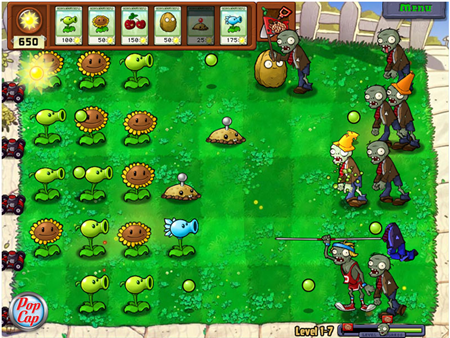
One game that seems made for the iPad is Plants vs. Zombies It is a bit like a tower defence game, but with fantastic graphics and beautifully paced gameplay. Number one son put me on to it, and I’m very glad he did.
Great fun.
One game that seems made for the iPad is Plants vs. Zombies It is a bit like a tower defence game, but with fantastic graphics and beautifully paced gameplay. Number one son put me on to it, and I’m very glad he did.
Great fun.
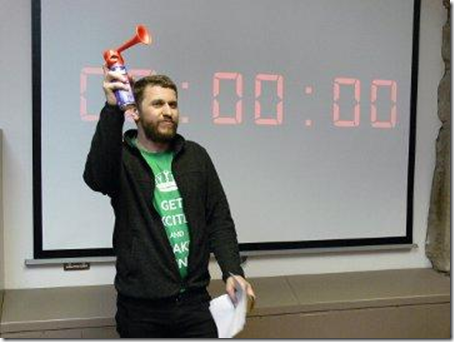
Calling a start to the event in noisy style..
Andy Sithers of Microsoft and a few Hull students got mention in an article in this month’s Edge magazine about some recent 48 hour game development competitions. This is where a bunch of teams are given a theme, 48 hours and a lot of pizza to make a game. XNA is a brilliant tool to use for this kind of thing, and Microsoft set up a couple of competitions this year.
Some students from Hull took part and while they didn’t win anything this year (having got a “Cheesiest Game” award last time) they did have a great time. I’d love to take part in one of these one day.

I think I’ve fixed the iPad WIFI now. Thank goodness. I had to reset all the network settings and then I’ve told my home network to always give it the same IP address whenever it connects. The device itself is lovely. I’ve put a few games on it and the user experience really is great.
The iPad is a lovely device. It hasn’t made me any cleverer or better looking yet (but then I’ve not had it a day) but it is nice to use. The screen is great to look at. Browsing web sites is a doddle (until you bash up against somewhere that uses Flash). The applications that you can buy look like they will be really quite useful. And number one wife quite fancies one too. The battery life looks good as well.
As of last night I loved it. This morning, when I woke it up and found that it no longer recognised my WIFI at home, I’m a bit less enamoured. I’d read about these problems when the iPad came out in the ‘states, but I presumed they would have fixed them before I got mine.
They haven’t.
I had to leave the house for work before I could do too much fiddling, and the iPad found the university network and is working fine at the moment, but I’m expecting a tussle when I get home. I’ll probably get around this by hard-wiring the network settings and with a bit of luck this will fix it. Otherwise I’ll have to wipe all the connections and re-connect. I can live with this, at a pinch, but I’m sure that number one wife wouldn’t like it much, along with anybody else expecting to buy an appliance.
I went onto the Apple support site and they have acknowledged there is an issue here, which is nice. They then said it might be a problem with “Third Party” – i.e. not made by Apple – routers. I found this a bit irritating to be honest. If I have twenty devices (and I must have used that number of WIFI devices at home over the years) and the 21st one doesn’t work I’m more inclined to blame the new device than anything else. Some of the suggested remedies (“Turn down the brightness”, “Hold the device above your head”, “Stand on one leg” etc) strike me as a bit daft when the proper solution is “Get Apple to replace the driver software with some that works”.
My advice, for what it is worth, is don’t turn your iPad off. I shut mine down last night and the reboot is the thing that seems to have broken it. Of course you might get the same effect when you wander in and out of range of your “Third Party” access point. Oh well.
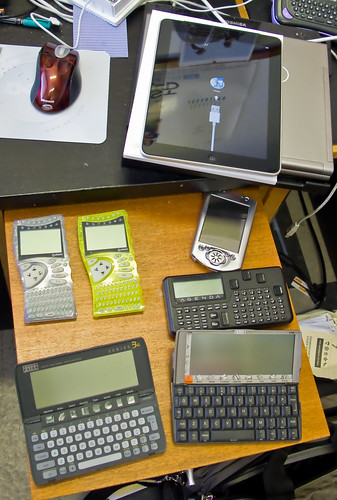
Some old gadgets. And a new one.
Been clearing out the cupboard in my office as part of a stocktaking exercise. Somewhat nostalgic. Do you remember all these?

The view from the audience, from left to right Jon Moss in the chair, Imran Ali, Helen Philpot and Prof. Calie Pistorius, VC of Hull University.
I’ve just been to something really, really good. With free drinks at the end. Hull Digital Question Time was set up by Jon Moss and brought together a panel of experts to discuss the future of digital technology. I wasn’t sure what to expect, but the combination of interesting questions, a range of expertise from the panel and sensible debate from the audience made for a fascinating evening. And then we all went to the bar..
I think the event has been filmed and it would make an absolutely great podcast, so with a bit of luck it will turn up in a downloadable form at some point in the future. In the meantime, if you get the chance to go to any events like this in the future (and I’ve already asked for another one) then you should jump at it.
One more thing, Jon told us that the date for the next Hull Digital Live event has been set. It is the 4th of November this year. Note it in your diary.
Before I went to give my talk yesterday we dropped in at the Microsoft offices in Schipol. Very plush.

They have these amazing lamp shades in the restaurant.

Time around the world, Microsoft style.
The presentation was great fun and the audience was lovely. I really like these trips out. Thanks to all the folks at Microsoft Netherlands for looking after me
You can find the presentation and all the XNA content that I used during the talk here.

What a great audience looks like
Got up bright and early this morning to fly to Amsterdam and give a session on XNA. I also got to take a look around the splendid Microsoft HQ in Schipol. More pictures and the presentation slides and program content tomorrow. I’m off to bed now.

Spent pretty much all of today marking. I’m half way through my first red pen.

In between gardening and feeling very warm I wrote a custom content importer for XNA 4.0 today. This is the way that you can bring in your own content into an XNA game. I’m playing around with some game ideas and I needed to get a bunch of data into my game engine so I can twiddle with it.
Turned out to be a lot easier to do than I thought it would be. Actually, the whole content setup is lovely to use in XNA. If you ever want to do this, you can find a really great start here:
http://msdn.microsoft.com/en-us/library/bb447754.aspx
The stuff seems to work fine in Windows Phone too. I really know how to enjoy myself in summer…..

My, but it was hot today. I took this picture first thing in the morning looking across the river from St. Andrew’s Quay. This is the colour that it really was, no retouching. Around 10 minutes later the mist had lifted and it looked nothing like as nice.

We were talking about different versions of Windows today and I mentioned that in Number 10 Downing Street they still use Windows XP on their systems. I told everyone that I’d seen it on the “historic” pictures taken inside the Prime Ministers’ residence during the election aftermath.
For some reason knowing this was regarded as sad…
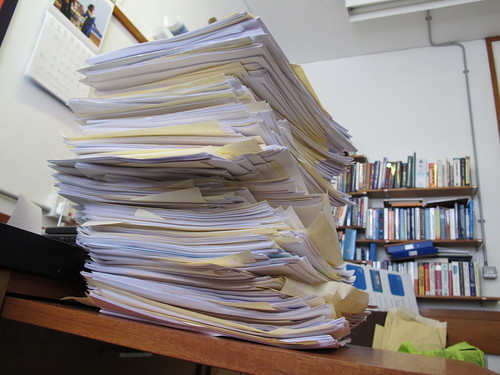
See rule 5
It was my “big” exam yesterday. Two hours of panic for the students. Four days of marking for me. So, nobody comes out of it particularly happy I suppose. For any academics out there I present Rob’s guide to marking.
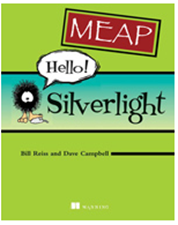
I’ve been lucky enough to get hold of an early copy of this book. If you are new to Silverlight and want to find out more this will tell you in a very nicely written way. It even has cartoons that are both funny and relevant – which is great. I strongly recommend it.
The book isn’t finished yet, but you can download and read the early chapters and even send comments back to the author. I’m looking forward to getting my hands on a proper printed copy when it comes out.
Think you know about exceptions? What would this method return?
static int funAndGames()
{
int result = 99;
try
{
throw new Exception("Boom");
}
catch
{
return result;
}
finally
{
result = 100;
}
}
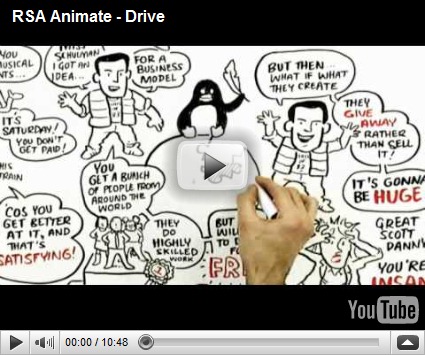
Thanks to Ginny for the link via Twitter. Find out more here.
If you want more insight into what makes developers tick and how to motivate them this video from underbelly is good too. The points that are made right at the end about interesting products are right on the money.

I’m writing a new version of the C# Yellow Book and I’ve been going through the chapters to make sure they still make sense. Today I’ve been playing with Exceptions. These are things that programs do when really bad things happen. When things are going badly for me in a chess game I have this annoying habit of kicking the board over and storming of to do something else. Exceptions are just like that, but for programs.
If a program finds itself in a situation where it really can’t go any further it can throw an exception and make the issue somebody else’s problem. Really bad in this case means things like “I asked for a number and you’ve given me some text” or “You asked for a file and I can’t find it”. This means that a proper programmer will put such potentially moody code into a try – catch construction so that they can deal with any tantrums that might be thrown:
try
{
// Potentially moody code
}
catch
{
// Code to recover the situation
}
If anything in the block under the try throws an exception the program runs the code in the catch block to try and put things right. When I was younger and more desperate to be liked I used to make sure that code I wrote didn’t ever throw exceptions, but tried to sort things out and carry on. Ask my object to load something from a file that doesn’t exist and it would return a null reference and keep going. Sure, the program that went on to use that null reference would explode some time afterwards, but at least my method hadn’t thrown a tantrum.
Now I’m more nasty. I let my programs throw exceptions if they are asked to do stupid things. That way the fault is generated much closer to the real reason why it happened. Problem is, that sometimes I don’t want to just pass an exception on, I want to do a bit of tidying up myself before I blow away the person that calls me. I can do this by catching the exception in my method and then throwing a new one.
try
{
// Potentially moody code
// Code to tidy things up
}
catch
{
// Code to tidy things up
throw new Exception ("Bad news message to caller");
}
Of course the problem here is that I have to write the code to tidy things up in more than one place. Once if everything works, and again if the exception is thrown. Which is where finally comes in:
try
{
// Potentially moody code
}
catch
{
throw new Exception ("Bad news message to caller");
}
finally
{
// Code to tidy things up
}
You don’t have to add a finally part to your try – catch construction, but if you do it is where you should put all your tidy up code. This is the code that must run whether or not the exception is thrown, and irrespective of what happens in the blocks above. I use code in the finally part to do things like close files, release objects and say bye-bye to network connections. And it works well except in one situation, which is kind of why I’m writing this blog post.
The code in my finally clause will not run if there is nothing to catch any exceptions thrown by the code in my try – catch construction. In other words, if the exception my code throws will cause the program to end for lack of an exception handler the finally clause will not run. I did some experiments to prove this, and decided it was something worth noting.
The thinking, I suppose, is that if the program is going to stop anyway, what is the point of allowing it to run any more code. Most of the time the finally clause will be releasing resources that will be freed anyway when the program is terminated. However, it is not always as simple as that. Sometimes finally code might want to say a formal goodbye to a remote host, or log some information.
Since you can’t rely on someone to always catch exceptions that you might throw (particularly if they are stupid enough to make bad calls of your methods in the first place) I think that this means you need to be a bit careful about using finally. If this means putting tidy up code into a method and then calling it both in the try and catch parts of your program, this might be a step worth taking.

Last week I paid off the wrong credit card by mistake and I now have a positive amount of money on it. I’m going to sign up for a balance transfer and see if it brings down the entire banking system.

Trafalgar Square and the National Gallery
Went to London today. Early start on the train and then a good walk round. The rest of the family acquired some culture at Wicked while myself and number one son took in the gadgets on Tottenham Court road.

Horse guard

Kerbside political comment

Not sure where the other hand went….
Rob Miles is technology author and educator who spent many years as a lecturer in Computer Science at the University of Hull. He is also a Microsoft Developer Technologies MVP. He is into technology, teaching and photography. He is the author of the World Famous C# Yellow Book and almost as handsome as he thinks he is.