Nine Thoughts of a Van Driver

WP_20130815_006.jpg

Weapon of choice.

For the next couple of days I’m leading a nomadic existence. Just me and a Bedford Luton van, hurting down the country, filling the van with stuff and then driving it all somewhere else. I’ve done this quite a bit in the past, helping families and friends move. and I quite like doing it really. There’s something about driving a great big van that is rather nice. You learn things:

  1. People are more inclined to get out of your way if you are driving a big, rented vehicle with out of town number plates towards them at speed.
  2. British roads are very lumpy. The number of bangs and crashes that we experienced on the M1 was quite surprising. The van suspension did the best it could, but we did have some teeth jarring moments.
  3. You can plug your smartphone into the audio system of a Transit van, but the socket is right at the bottom of a glove compartment, and looks exactly like a bolt which is fitted at the bottom of another, much easier to get to, cubby hole.
  4. Van sound systems are surprisingly robust and can go very loud indeed.
  5. Smashmouth Astro Lounge is absolutely great driving music.
  6. So is Pet Shop Boys Actually, although the first track has driving sound effects that can mask the siren of a police car coming up right behind you. Which can be scary.
  7. After a while you stop missing the rear view mirror and just get good at using the wing mirrors. And looking for shadows of cars that might be behind you.
  8. Nothing (speeding up, slowing down, going round corners etc) happens suddenly in a fully loaded van.
  9. The sound of the sack barrow crashing about in the back of an empty van when you stop at traffic lights is very scary, until you figure out what it is.

Kids Can’t Use Computers?

DSC02256_7_8.jpg

A while back I read this post titled “Kids Can’t Use Computers – And This Is Why It Should Worry You”. It depressed me. Not because I agree with all of the sentiments of the author, but more because I worry that people may take this kind of viewpoint seriously. The underlying tenet of the article (I’ll save you the bother of reading it) is that only a few people can actually use computers, especially kids. And this is apparently a bad thing.

The author brings out a collection of “horror stories” of people who “can’t use computers” for one reason or another, including not knowing that their laptop has a WiFi off switch. It says a lot for the nature of computer folk that a good portion of the debate following the post is an earnest discussion of whether or not laptops should have such a switch. I’ve actually been caught out by this myself, and therefore, by definition, am unable to use a computer. Oh well. Back to the drawing board for me.

The author completely misses the point that it is perfectly reasonable to expect that things should just work. Engineers have been very good at producing products that “just work”. I can remember when starting a car in cold weather was a tricky affair which was involved lots of fiddling with the choke and pumping the accelerator pedal. Nowadays you just push a button.

Cars have been around for well over a hundred years, and their fundamental function has not changed over that time. Computers have been around for much less than half of that and we are still discovering new things we can do with them. I think it is safe to say that we have a much better handle on how to make a useable car than we do a useable computer. Which means that people will sometimes have problems getting their systems to do what they want.

The current generation of computer hardware and software is very prone to failure when confronted with frailty of human nature in all its forms. But people will translate their experiences with their cars to computers. Why should the computer not just work when I press the button?

It is interesting to watch kids use technology, to see them running their fingers over the TV screen and expressing surprise when it doesn’t respond to their touch. To see them start watching a video on an iPad and then become confused when the video doesn’t just continue on the TV when they turn it on. They are going to see these things as omissions that need to be fixed, not evidence that they are too stupid to use those devices. And quite right too.

So what do we do about it? The author suggests a “back to basics” approach so that everyone can learn as much about the low level functions of computers as he is evidently proud of knowing. Then we can all argue about the best version of Linux to run on a mobile phone while our kids throw things together and build the future out of what sticks. Just like it ever was.

It is very important to learn the low level stuff, to have an understanding of the limitations of the computer, what they are really good for, and how you get them to work for you. Learn to program. Absolutely learn to program. But then use that ability to make things and have fun making things. Take ideas (silly and otherwise) and give them life. Spread them round. Build solutions and games that make people happy (or at least smile). Learn about the technology by playing with it. If it turns out that your ultimate interests lie outside the realm of processors and memory then that’s fine, but an understanding of what a computer is good for and how you make it work is always really useful to have.

Never regard your skill with computers as marking you out as in any way special unless you can do everything else as well. I can write code, but I can’t draw for toffee. If an artist comes to me with a computer problem I’ll not call them stupid if I can solve their problem and they can’t. Because I can’t do what they can. 

A proper computer professional is as good with people as he/she is with computers. In fact, bearing in mind that a lot of computing is finding out what people want and then making a happy ending from their wishes, I reckon that good inter-personal skills are more important in computing than they are in just about any other field. Work at these as you would a new programming language. And learn to write well.

For me computing is all about having fun making stuff and engineering happy endings. I’m not looking for a future where everyone is “clever” enough to use a computer. I’m looking for a future where we have enough people around who are able to produce compelling and useful applications for those who want to use computers to make their lives better. In other words, computers should “just work” and we should have folks around who are skilled enough to make this happen (and enjoy doing it).

Surface Decals Arrived

DSC02253_4_5.jpg

The skins that I ordered from Decal Girl arrived earlier this week. Each one has on it a link to a download for a background that exactly matches the “hole” in the screen border. This means you can get effects like the one above. I really like this, although if I use the same background for my desktop it makes things confusing, as I try to drag things into side of the device.

If you want to make your devices nicely unique and protect their surface a little (note the play on words there) then I reckon they are well worth a look. The picture, since you asked, is of a rock pool at the seaside on the Isle of Man. I liked the shape of the cracks and the blue sky above.

Windows Phone App Studio Screencasts

image

I’ve done a little screencast about getting started with Windows Phone App Studio. It covers making and deploying your first application, and actually shows you to build something that is useful. I’ll record a few more over the next week or so. You can find the screencast here.

Windows Phone App Studio

image

If you fancy making a Windows Phone application but you’ve not done much programming then you might find the Windows Phone App Studio worth a look. It starts from a web based interface you can use to create applications that bring together your favourite web sites, RSS feeds and lumps of data. You can turn out very professional looking applications with menus,  custom lock screens and tiles. What’s more, you can distribute them to any Windows Phone owner who scans the QR code that is produced when your app is built. And the apps that you build can be the basis of Marketplace your Products because you can download the entire solution and add your own behaviours alongside the pre-built ones.

If you are planning a party, want to tell the world about your amazing pizza collection, need to keep track of places you have visited or just want a quick way of finding all your favourite web sites and blogs, then you can create an application of your own to do just that. In around ten minutes or so.

Office Tidying

Untitled

Just had a visit from a Fire Safety person (#nogoodwillcomeofthis)

He didn’t really have to say much. Just look around my office at the collection of daisy chained mains cables, piles of paper and other inflammable detritus lying around the place. So, time for a tidy up methinks. My bin is now full and I can see part of the surface of my desk. And two mains extensions have gone back to the systems team. I also found this rather nice button while I was clearing up. Ongoing.

Humber Bridge Toll System Shutdown

IMG_7265.jpg

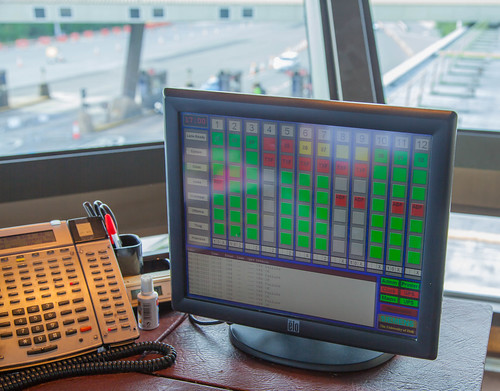
The minic system in the bridge control room

Little known fact. Since 1998, if you have driven over the Humber Bridge and paid a toll then you have been interacting with some software that I wrote. Ian Bell and myself produced the instation and minic software that has been keeping track of bridge crossings and toll takings. We worked with Siemens Road Traffic Controls who put the hardware into the booths, our code kept track of mis-registrations and printed out the totals tables. It’s been working ever since, with a mid term upgrade and a little problem when it lasted longer than it was supposed to.

And today, just after 5 o’clock in the afternoon, I turned it off forever.

IMG_7295.jpg

The final moments

The system is being replaced by an altogether more up to date one, which allows for toll payment without stopping, special rf badges and all kinds of new fangled things.

It seems like less and less of my software is being used in the world. For a magical time a few years ago programs I had written were putting datestamps on Budweiser beer and Cadbury’s Roses, passing part programs into machines that cut wing-spars for aircraft, measuring winch lengths on trawlers and flushing toilets in the Reckit and Coleman test labs in Hull. Happy days.

Pluggable USB 3 Docking Station

image

Can you spot the difference between this one and the other one. Turns out that I can’t.

My home version of “one usb to rule them all” arrived today. I used my own money to buy this one (just got paid) and I was feeling rather smug, in that I had got it for thirty quid less than the university had paid. Clever me.

Or not. Turns out this is not exactly the same. It only has one video out port, rather than the two that the office device has. The documentation mentions two ports, but that is because there is an adapter in the box, which allows the single port to be used with two different kinds of monitor.

Oh well. It’s not as if I have two monitors at home, or the desk space to stand them on. And I’ve noticed that the DisplayLink software, while quite splendid in that it just works, does steal around 5% of the processor. Which means that two monitors would take a much bigger chunk.

Everything else works just fine though, and it really is nice just to have one plug to worry about. If you regularly connect your laptop to your desktop I reckon this is still a really good bet.

Accessing Windows Phone Settings from code

DSCF3741.jpg

I’ve discovered that one way to make sure that I remember how to do something is to drop it into the blog. That way I can go find it when I forget. This time it is the code that you use to open up the connection settings dialog page in Windows Phone 8.

ConnectionSettingsTask connectionSettingsTask = 
                                  new ConnectionSettingsTask();
connectionSettingsTask.ConnectionSettingsType = 
                                  ConnectionSettingsType.Bluetooth;
connectionSettingsTask.Show();

This will do the business. You need to include the Tasks namespace:

using Microsoft.Phone.Tasks;

There are options that you can use to open up the WiFi, Cellular and Airplane modes.

Whenever I open the Airplane mode I always want the phone to say

“Surely you can’t be serious?”
”I am serious. And don’t call me Shirley”

Century 21 Comic Strips

image

As well as the Pacific Rim book (Pacific Rim? Sunday’s Post. You mean you’ve not been to see the movie yet. Shame) I also got a collection of Century 21 comic strips. We used to get TV21 magazine every week, and after dad had finished reading it I was allowed to take a look.

Anhyoo, the Thunderbirds strips were always the best. They were illustrated by Frank Bellamy who was the only one who seemed to be allowed to put his name on the strip. With good cause. I still reckon this was some of the best comic art ever. Don’t believe me? Grab a copy of the book and take a look. There are actually only a couple of Thunderbirds strips in the book, but the other ones are a good bunch too.

And I’ve just found out that there are lots more available too, which could prove expensive…

Loving Love Letter

image

A trip away wouldn’t be a trip away without a silly game or two to play. So I got hold of a copy of Love Letter. The game is beautifully presented in a red carrying pouch, which is just as well as you only get 16 cards for your money. But the game is still super.

Each player takes the role of a potential suitor finding confidantes who will deliver their messages of love to a beautiful princess. During a round you have to find the best person to deliver your message of undying devotion. But you can also knock out other players and swap cards with each other in a way which is great fun. Even if, as for me, most of your cunning moves misfire in a spectacular fashion.

Number one son observes that at the end of the day it is really only about chance and at some points you are really only choosing from one of a number of possible options which all have a similar probability of success. He’s right, but the setting and the way you can knobble people if you get lucky carry the game along to the right side of fun for me. Well worth a look I reckon.

Pacific Rim. Go see.

image

First things first. Pacific Rim is complete rubbish. But it is so complete that it is actually quite wonderful. If you are prepared to make the mental effort to suspend your disbelief somewhere really high (or just leave the critical part of your brain at the door) then you will really, really enjoy it.

If you are able to take on-board “facts” like it requires two melded human brains to control a giant toy robot and that the best way to select pilots for said robots is to to have them try to hit each other with wooden sticks then you will do just fine.

The thing that did it for me was the level of detail and little cultural references that made the daftest parts make sense at the time. The acting is well up to par and everyone gets on with the job in hand with enormous gusto. The computer graphics guys had taken the sensible precaution of making sure that most of the action is either at night, in the rain, underwater or all three at once, so that everything looks properly believable and any necessary bending of the laws of physics is nicely hidden.

If you only go and see one big, daft, movie this summer then it has got to be this one.

I liked it so much I bought the book. Which is very good too.

Writing with Colour at the Guardian Masterclass

DSCF3564.jpg

Anyone can write, just like anyone can cook. As soon as you move from restaurants and ready meals to getting ingredients and mixing them in pans you can start thinking about getting a white uniform and people shouting “Yes chef!” to you across steam filled kitchens. Moving beyond shopping lists and one line Facebook updates means that you can start pondering putting “writer” on your business card and extracting killer quotes from unresponsive interviewees. Or then again, perhaps not, because of course the really important thing is what everyone else calls you.

If you are the only person that thinks you are the next Jamie Oliver then you might have a hard time getting folks to eat your food.  And while the internet does provide a potential audience of billions, getting them all to come and read your web site will take more than just your idea of deathless prose. This means that you have to do the hard stuff, like practice and learning how to get better.

I’ve never dared call myself a writer; I’m more someone who throws a bunch of words at a blog post every day to see which ones stick. But today I went along to a Guardian Master class called “Writing with Colour” to find out a bit more about this writing business. There was actually another reason for going as well, the sessions were being given by writers who I’d long admired from afar, and I liked the idea of admiring them from a bit closer up.

There were about 80 or so of us on the course, which took place in the actual Guardian newspaper building in London. The sessions were all great. If you have a low opinion of journalists and editors then you should go along, just to find out how thoughtful and considered these folks are about what they do.  I’m pretty sure that not all writers are like this, but these were folks who I’d be happy to listen to all day, which is just as well, because that is what we did.

A few of my thoughts from the sessions:

Read what you have written. Out loud. All the writers took evident pleasure in reading what they had put on the page. This is as confidence thing I reckon and darned good advice. Sometimes you might like what you hear. If you don’t like it, go back and change it until you do.

Be loyal to your work. This can mean a bit of internal wrangling as you seek permission to print that quote from a reluctant interviewee. It might mean you can’t be a totally nice person all the time. And it might mean dropping that wonderful sequence because it doesn’t add anything to the piece.

Always deliver what you were asked for. Someone asked Lucy Mangan what she did if her four o’clock deadline came along and she hadn’t thought of anything to write about.  Her reply was brilliant. That. Does. Not. Happen.  If you are a proper writer and you are asked to write something that’s what you do. You can wrestle with your inner demons about the content (and you should) after you have pressed the send button, but the important thing is if you are asked for 550 words you should deliver 550, along with a convincing pitch for why you should be allowed another 200 or so.

Always edit, and always cut. The editor is the person who makes things better and tighter, sometimes by cutting out what the writer thought of as the best bits. If we end up losing the traditions of print journalism I reckon the editor is the person we will miss the most. This probably means that writers will have to spend more time editing their own work. So try to do this.

Work at what you write. I was very pleased to find that nobody said that they found writing easy. Everyone said they had to work at it. Interviews take preparation and persistence in writing everything down. Features take research and rewriting.  And the work doesn’t stop when the piece is finished, everyone valued re-visiting items and look at why they wrote what they wrote.

Seek out the colour. Work to find that killer fact, or interesting angle, which will give you a hook to hang your words on or will be quoted in the pub by your readers. If you are very lucky the colour will find you, but mostly you find it in the research you did, or the huge pile of notes that you made.

Last week I sent a jaunty tweet to the organisers saying how I was bringing along some crayons, as the subject was “Writing with colour”. I can imagine the sinking feeling in the stomach of the recipient, along the lines of “We’ve got a right one here….” Sorry about that.

Anyhoo, I found the whole affair really stimulating, and if you want to get tips about improving your writing style, and maybe meet a few heroes, then it is well worth the price of admission. And the lunch was good too.


DSCF3560_1_2.jpg