Use thick wires for your power signals
/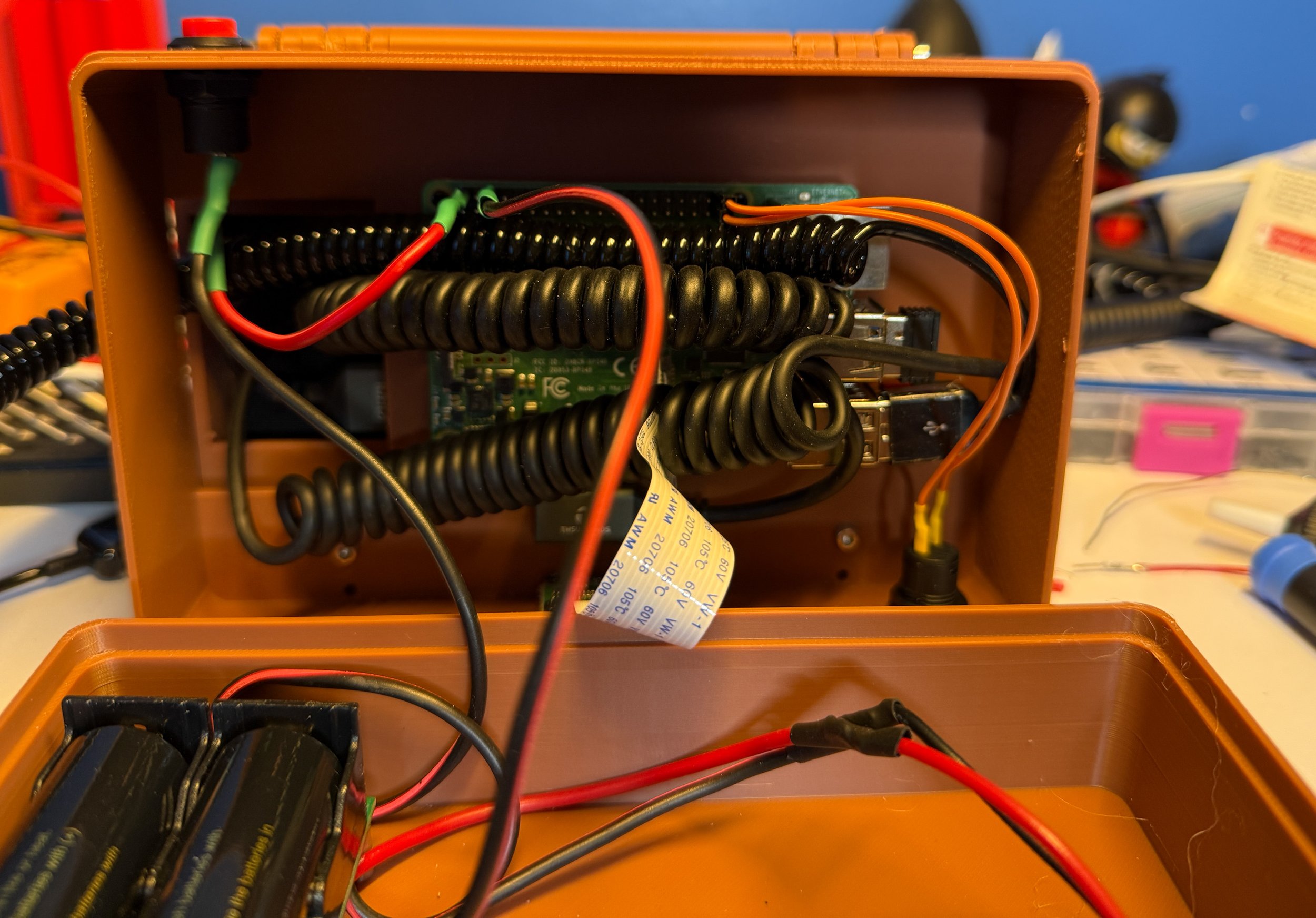
The black and the red wires are nice and chunky
The “Bourbon Classic Camera” is very nearly finished. It’s been in this state for the last few weeks as I add a range of “finishing touches” including things like a screen that works and a power supply. Today I was wiring in the UPS unit that I’m using to power the Pi directly and it didn’t work. That is, it would get into the boot process, reach the point where the screen is supposed to light up and then stop. Oh well. As I’ve said before, power supplies are always a problem.
I’m doing something mildly naughty, in that I’m putting the power into the Pi via the 40 pin “hat” connector. This works, but it bypasses all the funky power negotiation that you get when you use the usb c connector. It means that you can provide five volts, and only five volts, and they had better be stable and able to deliver the current the Pi needs.
Mine weren’t. Mainly because I’d used dPont cables. These are fine for moving data around (although personally I prefer to wire wrap) but they just don’t have the copper thickness for power. The wire ends up being a resistor in series with the power supply. This means that the more power the Pi wants, the lower the supply voltage gets.
In the end I used some speaker cable from way back (another reason never to throw anything away). I also soldered pin connectors directly onto the wire and made sure that they gave a good positive connection. All is well now, and the Pi gets through the boot process and works a treat. So, if the device in your build is running slow or not running at all, you might want to think about using thicker wires for the power.


