Hardware Meetup with added Claude
/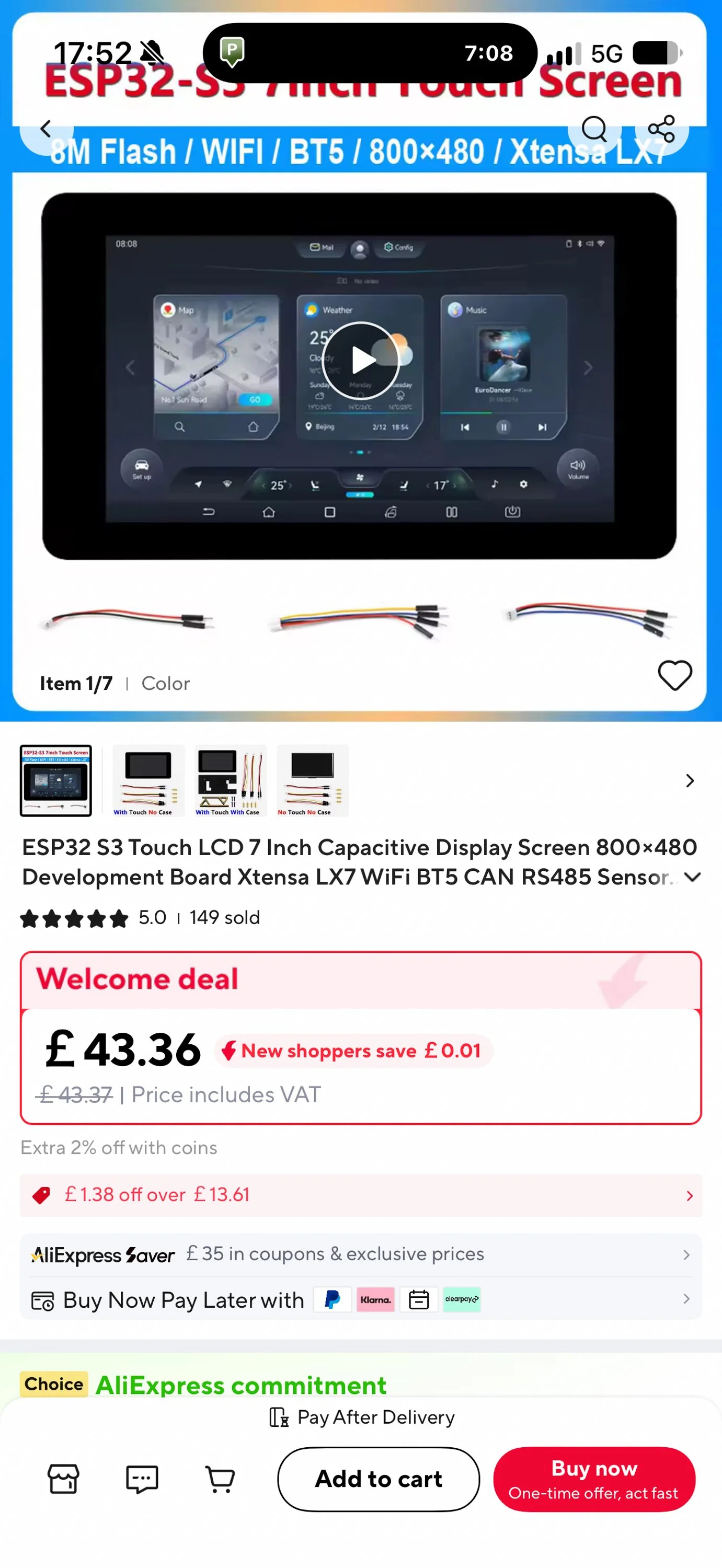
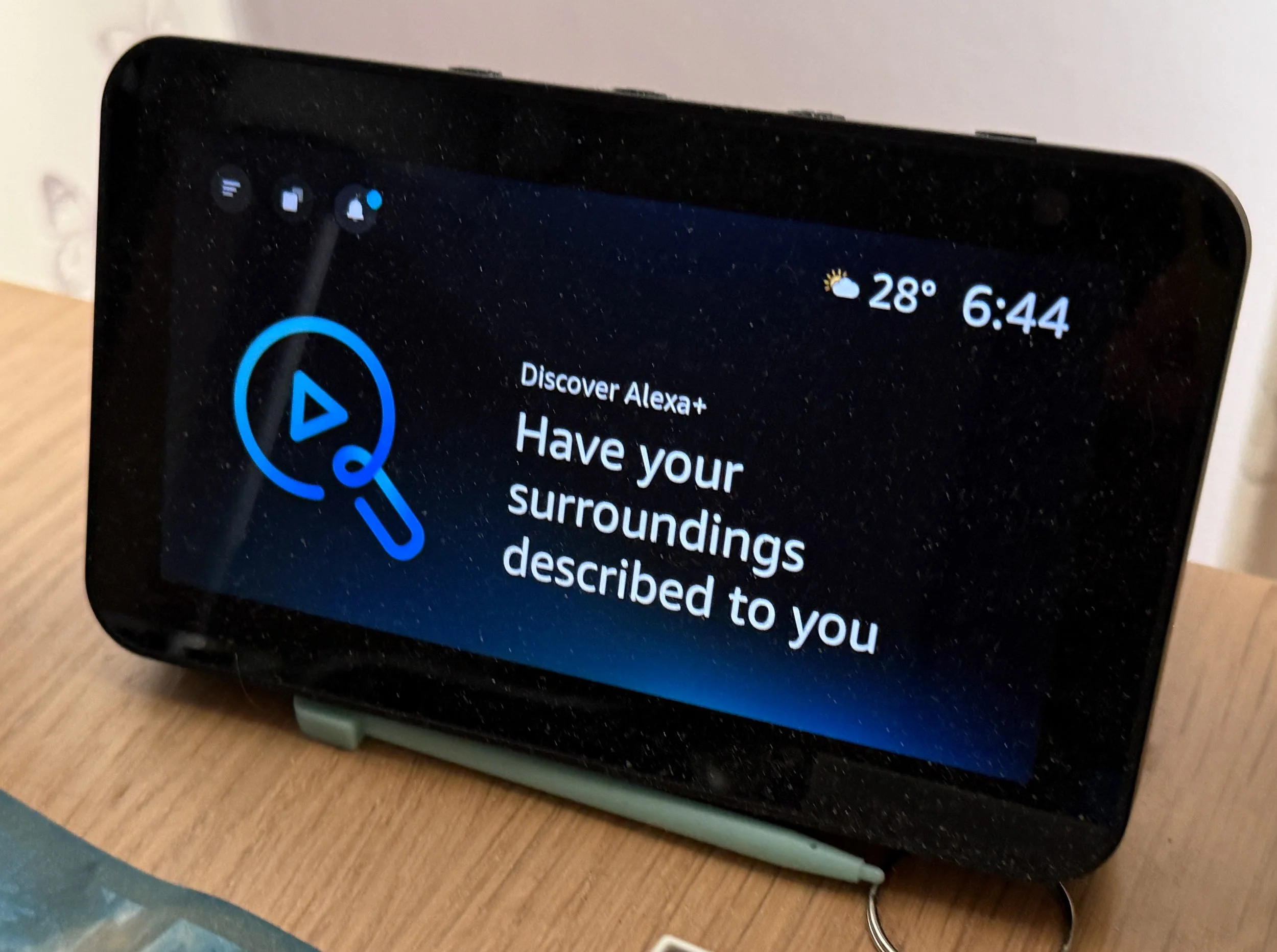
This is the device. Check out that welcome deal
I took everything with me to the Hardware Meetup tonight. Everything, that is, except the Raspberry Pi PICO I was supposed to be working on. Ross took pity on me and lent me an ESP32 powered display that he had brought along to play with. A while ago I’d seen a video of someone who just plugged a random device into his PC and then asked Claude to figure out what it was and how to program it. I figured I’d have a go at that. The results were deeply scary.
Claude was able to identify the device and even pull out the demonstration program inside the device memory. Then it had a look at the code and told me what the demo program did. I asked Claude to re-write the demo in Python. Claude thought for a while and then told me that Python would be too slow for the graphical update. So I suggested Claude use Rust instead. Claude then figured out that I didn’t have rust on my laptop and offered to instal it. Then Claude figured out that I was using Windows on ARM, found the correct version of the SDK, installed it, tried to build something, failed, updated some elements and rebuilt others. Then it managed to get a test program running on the device. This was in around an hour or so and is officially amazing.
It was great to see so many folks turn up and just set to building stuff. And we kind of managed to make the local pizza place look busy when we went for dinner.
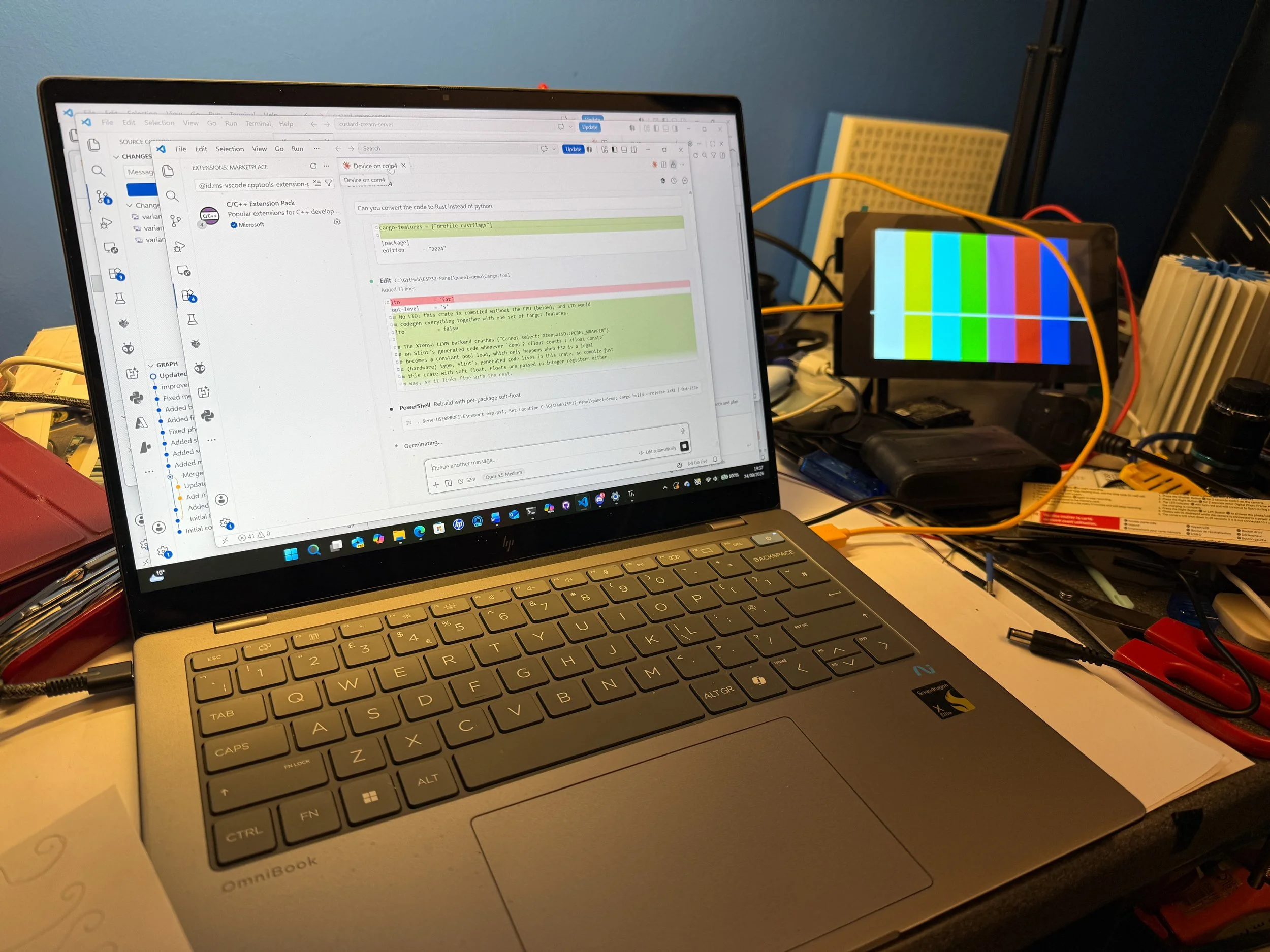
I took this picture when I got back home. I now have Rust code running on the device, and Claude is decoding the original binary and writing a Rust version of it. We live in very strange times.