Faberdashery Space Marine Blue Looks Lovely
/
I’ve been trying some of the new PLA that I got from Faberdashery. This is Space Marine Blue and I think it looks ace.
I’ve been trying some of the new PLA that I got from Faberdashery. This is Space Marine Blue and I think it looks ace.
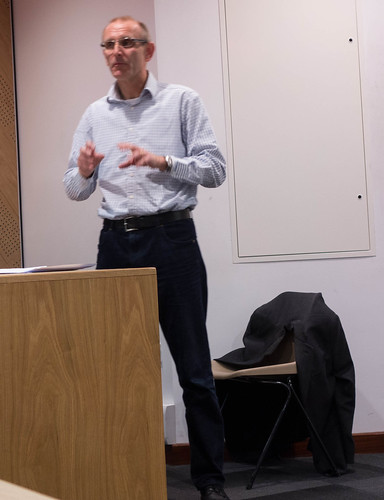
Today’s Rather Useful Seminar followed on nicely from the one last week, about steps to take to get your game out there. Except that this was the view from the other side of the street. David Clark of Cuba Entertainment has been in the gaming business since the early nineties working with such companies as Stainless Games, SCI, Eidos and Sega. He has seen the rise and fall of the cartridge based console, the disruption caused by the PlayStation 1 when Sony released it on an unsuspecting world, and most recently the shattering effect of the arrival of Apple and the App. Store on game distribution.
He has also seen the influence of the game publisher wax and wane and the rise of the self publishing game house. David was here to tell us how you can take your great software and make it into successful product. He had some very interesting things to say about money, where to get it from, what do do with it and the importance of an exit strategy.
Two things stood out from his talk for me. Firstly that 60% of something is an awful lot more than 100% of nothing. The value that publishing services can give to a game are well worth the cost. You might think that you can promote and sell your game yourself, but unless you got into game development to do just that, you are not going to enjoy it very much, and besides you should really be spending your time adding value to your product, not trying to persuade people to buy it. Much better to let go of some of the equity and use it to pay for people who can get things moving for you.
The second thing that stood out (and I was very pleased to hear this from David) was the importance of Networking. And no, I don’t mean WiFi. I mean having business cards, making useful friends and keeping people informed of what you are about. The kind of funding that a fledgling game developer needs is just the kind of stuff you can get from folks you happen to know who have spare cash lying around. So you need to make efforts to “happen to know” them. This means getting out there and promoting yourself, which is spectacularly difficult for an introverted computer scientist, but it is well worth the effort.
Thanks so much to David for coming along and giving us the benefit of his experience and knowledge.
You can find his presentation slide deck here.
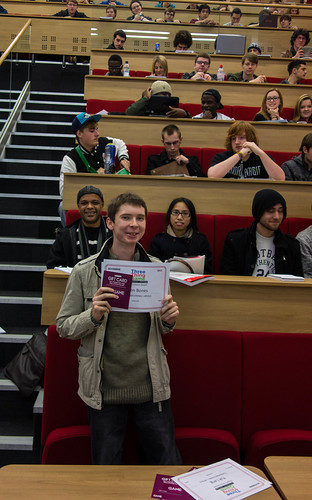
This is Ben from TeamNameString = YOLO who won the People’s Choice award for the recent Three Thing Game. We had 31 responses and these folks got the highest number of votes by quite a margin.
If you want to find out about their entry you can take a look at their judging video here.
At the end of this week things get really interesting if you are into anything digital, and games in particular. The latest incarnation of Platform Expos is hitting the centre of Hull. I always end up wondering how they get all the people along to speak, and manage to get so much industry involvement. But they do, and you can get the benefit of all their efforts by going along to the events this Friday and Saturday, all around the middle of Hull. You can find out the programme, and get tickets, here.
Simon and I will be joining in on Friday, when we are doing some fun and games with Python, Pi and hardware interfacing. Simon is also giving a presentation on the Saturday too. Platform Studios will be showing off their games and if you have any kind of interest in things digital you should get yourself along there.
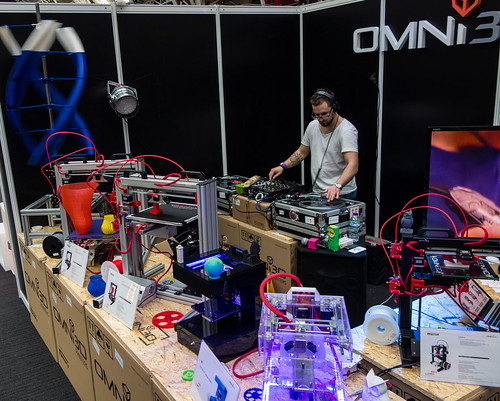
One more picture from yesterday. This stand had some amazing printers and a DJ as well.
Today I had a go at printing with some of the fibres that I got yesterday. It didn’t start well to be honest. I put in some lovely translucent green PLA that I’d been given and the printer produced some rather gooey looking outputs. Turns out the new material had a much lower melting point that the stuff I normally used. So when Una heated it up to 220 degrees I was printing with something very runny indeed. When I brought the temperature down to a slightly cooler 200 degrees things improved massively, and I ended up with some much more pleasing results.
That’s a tip for 3D printing folks. Try different temperatures. I’ve now started printing a bit cooler and my prints have a bit more detail, and the layers seem more even, which is nice.
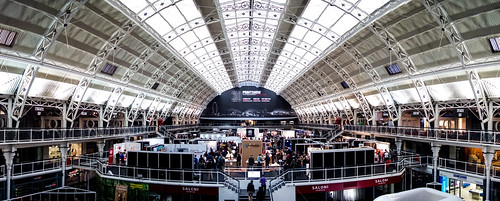
A rather nice venue
So today it was up bright and early and onto the train for a trip to the London 3D Print Show. I went last year and I enjoyed it so much I’ve gone back this year. There was a bigger venue and more stuff going on. Same mix of presentations, stands and exhibitions, but generally just more of it. The business is definitely maturing. The general thrust of things is towards are more “appliance” type devices which folks could just get hold and use to print things. There was also a stunning display of how 3D printing is being used in medicine, from printing tissue and prosthetics to making 3D mock-ups of the patient for the surgeon to practise on.
Ultimaker were there with the new Ultimaker 2 and a wall of Ultimaker 1 machines. There were lots of other brands there I’d not seen before.
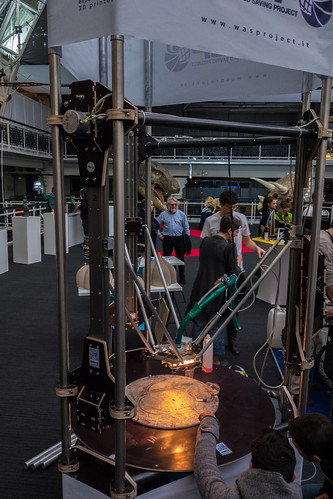
This printer was turning out pottery, which was very impressive.
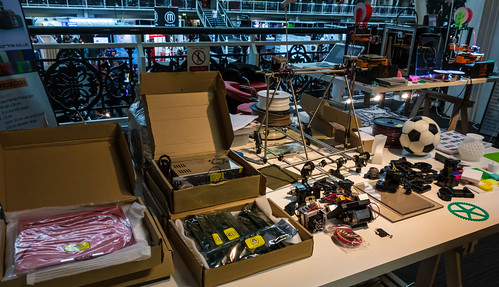
They even had people selling parts. That heated bed looked very tempting….

There were 3D printed moustaches up for grabs.
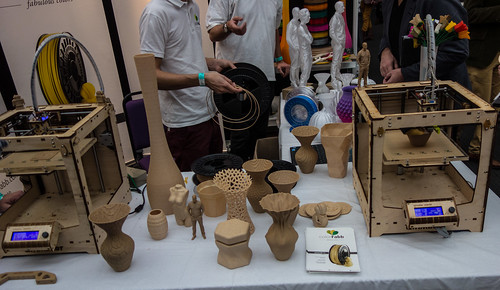
This stuff looks amazing. PLA fibre with wood particles in it.Makes prints that look like tiny carvings. I got a little sample of the stuff which will be very interesting to play with.
On the way out I went past the shop and bought a bunch of Faberdashery colours that look really nice. I’m going to have a go at printing with them tomorrow. But I might have a bit of a lie-in first.

At the Rather Useful Seminar this week we talked about how to market games that you write.
Next week David Clark of Cuba Entertainment will be visiting the department and telling us about the other side of the coin as he talks video game investment and angel investors.
If you are interested in how the games and entertainment industry work you should come along to this seminar at 1:15 pm in Lecture Theatre D in the Robert Blackburn Building on Wednesday 13th of November.

One tough audience. No really.
Some time back I was invited to give a talk about computers at Triella Women’s Institute. So today I went off to strut my stuff. It was great fun. I talked a bunch of what I thought was computer common sense and then I stopped and asked for questions.
I’ve forgotten what the first question was, but I won’t forget the second one in a hurry. “Why did Blackberry go bust?”. Hmmm. Tricky. And not quite what I was expecting. Anyhoo, I thought I’d better have a crack at the answer. Blackberry have managed to go from Hero to Zero in a few short years. There was a time when everyone who was anyone had a Blackberry phone. Now just about nobody does. Personally I reckon they took their eye off the ball for too long and assumed that people would always want what they made because they always had.
Blackberry aren’t the only ones who have taken a pounding from the new wave of touch screen devices spearheaded by Apple but they were the ones that were last with a proper response. And they are now paying the price. And it didn’t help that their service broke more times than it ever, ever, should have.
Next up was a question along the lines of “Why is Windows 8 so horrible?”. Hmm. Tricky again. Actually Windows 8 is not that bad. It is just irritatingly different when you first start with it. My top tip is to use the Windows key to start a search for your chosen program. I just press Windows, type “WO” and then hit enter. And up comes Word. Much easier and quicker than any mouse powered start menu. Of course I didn’t help my case by being horribly inept when I was trying to show this off, because the keyboard to my tablet was safely stored in my bag….
Then we talked about all sorts, from Smart TVs, to password policies, to the perils of dodgy power cables. Great fun, and thanks for inviting me.
You can find the slides here.
I think Simon learned a lesson today.He learned not to email me and say “I’ve got some great ideas for the Rather Useful Seminar this afternoon about getting your game to market”. I told him I had an even better idea.
He could do the seminar.
So he did. And it was excellent. We kind of did it between us (in other words Simon said things and I shouted out stuff from the side). We also had John and Josh come by to talk about their experience getting games to market. They started by publishing games from Three Thing Game and are now planning proper releases, with game companies based down at Platform Studios. Points to ponder:
Thanks so much to Simon for putting together such a good presentation at such short notice. You can find the slides here.

I tend to buy all my 3D printing fibres from Faberdashery. They are by no means the cheapest, but I’ve found their quality and consistency to be very good, and they have a range of really nice colours that go well together, at least to my untrained artistic eye.
There is one little trick that the company plays that is really rather cunning. When they send you a box of fibres they always include a few metres of a colour you haven’t ordered, to play with. This is sneaky because it usually ends up with me ordering a full roll of that colour. Today I got some new fibre and found that they’d included some gold stuff. This is not just gold, it has tiny flecks in it that look really nice. The picture above doesn’t really do it justice,
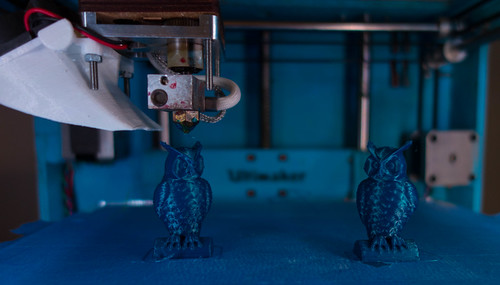
I’ve never really managed to get a happy ending when I print very small objects, they just tend to merge into one molten looking lump. However, I thought I’d have a go because if things went badly at least I’d not waste much raw materials, which didn’t cost me any money anyway. So I printed out a couple of tiny owl earrings and I don’t think they’ve turned out half bad.
A 3D printing tip: One of the things that determines the quality of the print is the “layer height”. The printer prints by laying down successive layers of plastic on top of each other. In theory, the thinner each layer the higher the resolution of the printing. My printer is supposed to be running at high quality when it prints layers which are a tenth of a millimetre thick. However I’ve found that in practice an ultra-thin layer doesn’t work very well. The print head is so close to the object being printed that it melts one layer as it puts the next on top, resulting in a sludgy looking mess. I’ve had much better results printing with thicker layers. The owls above were printed using layers that were a fifth of a millimetre in height. You can see each layer, but I quite like that, in the same way as wood has a grain, I quite like to be able to see how the object was constructed. I reckon it is worth trying to print out at with thicker layers sometimes. The printing will be quicker and it might even look nicer.
The judging videos from Three Thing Game November 2013 are now available on YouTube. You can find them on my YouTube account: https://www.youtube.com/user/RobMilesOnTheTube
Today I bought some more Giant Lego Bricks today to store things in. I’m going to fit them together with the ones I bought last week. Number one son was not convinced. “You’ll have problems getting things out of the boxes at the bottom” he said.
“That’s where you’re wrong” I replied. “I’m not going to put anything in the bottom boxes”.
That told him. I think.
Well, after a day of solid development we had our finals. I’d expected some attrition, particularly as the event came on the end of a tough day in a tough teaching week, but at the end we had 25 teams ready to be judged and so our three teams of judges sallied forth into the fray. They were looking for adherence to the theme of the three things, presentation quality and plain good old playability. After they had seen their assigned teams they each came back with three entries worthy of a finalist place. So we headed to the lecture theatre, fired up the Surface and gave each team three minutes to pitch their game to the whole audience.
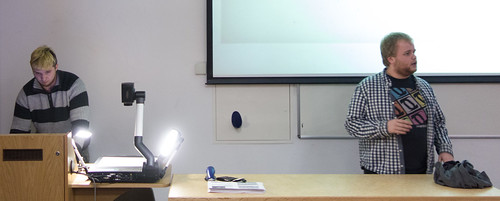
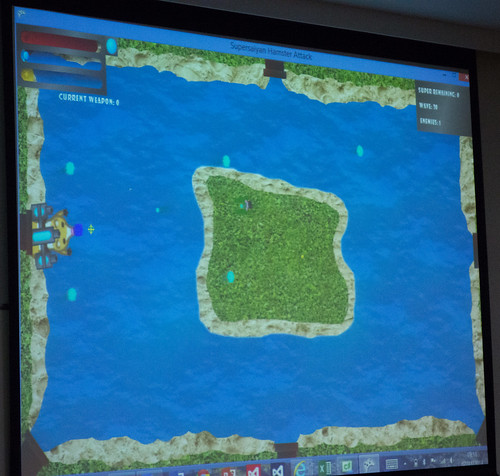
First up was “Two Thing Game”: Episode 2”, otherwise known as Mateusz Bajer and Ben Convenley. They had taken “Super Saiyan”, “Hamster” and “Water Fight” and fashioned an island defence game, with you as the Saiyan in the title beating off hoards of hamsters intent on stealing your water. Above you can see the “Boss Hamster” about to enter the fray. Proper hamster blasting fun.
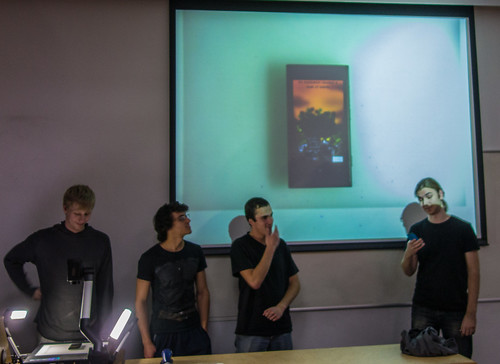
The second team to present had the best name I reckon. “The Bing Wang Theory”, Adam Brookes, James Briffa, Alex Belezjaks and Artur Neugodnikovs had made a Windows Phone game out of "Radioactive", "Spider" and "Racing". The game had you tipping the phone to dodge the radioactive bullets hurtling towards you, while trying to create chains of colour in the bullet stream that would change them into harmless isotopes. A nice balance of challenges in a single game that made really good use of the accelerometer and touch screen on the phone. They even had a back story in rhyme. I hope this one makes it into Windows Phone Marketplace.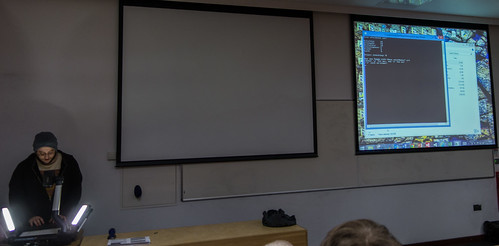
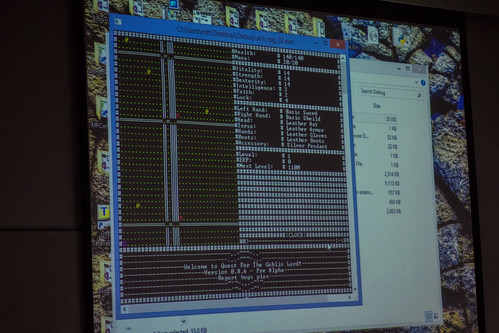
Next up was “Teams are for losers, and so are graphics”. This was a one man team who did everything with ASCII characters. Living up to the name in the most literal manner possible. William Grey had fashioned an entirely text powered RPG around the things “Pork”,”Crates” and “Light Cycles”. After a slight hiccup at the start due to the fact that the demonstration machine lacked a numeric keypad, William was able to show how to move around the environment searching for crates containing the life-enhancing bacon.
The next team to present were Spooky Elephant. To my eternal shame I was so caught up in the excitement of seeing the team I was kind of part of present at finalist level that I neglected to take any pictures of the presentation. Still, the team of Simon Grey, David Parker, David Miles, Lewis Jackson and others had produced a very playable game from a starting point of “Walrus”, “Swimming” and “Custard”. Above you can see Wilbur the Walrus being steered away from the impending custard tsunami.
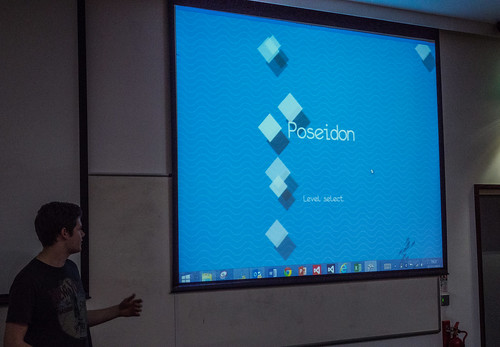
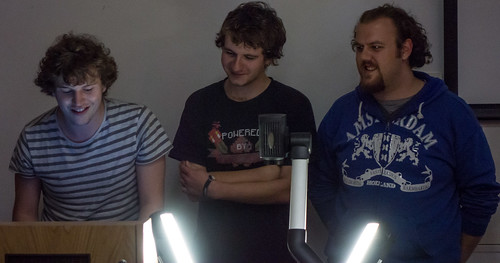
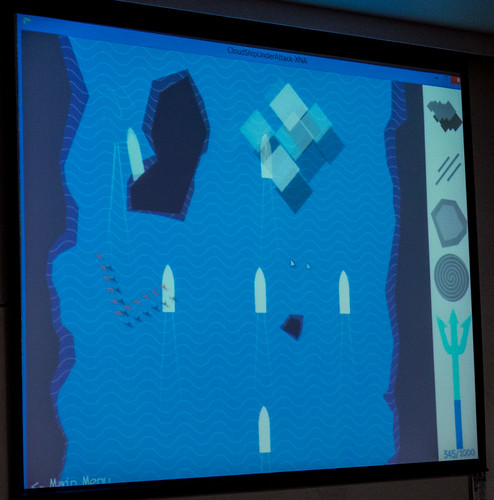
The “Rusty Spoons” are a Three Thing Game institution. Thomas McPherson,
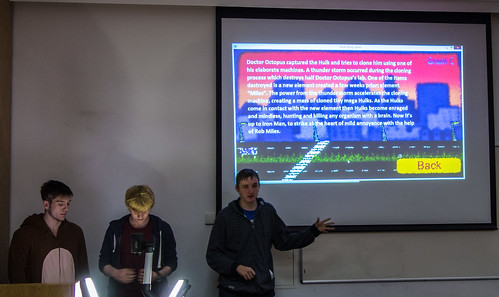
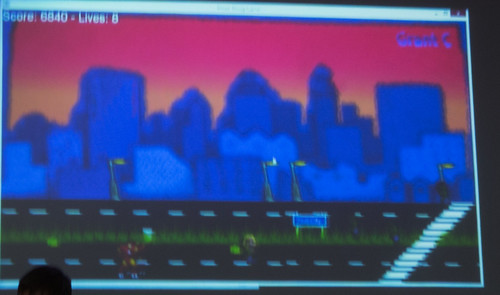
This was the first Three Thing Game for the Grant C team. But Matt Jemmett,
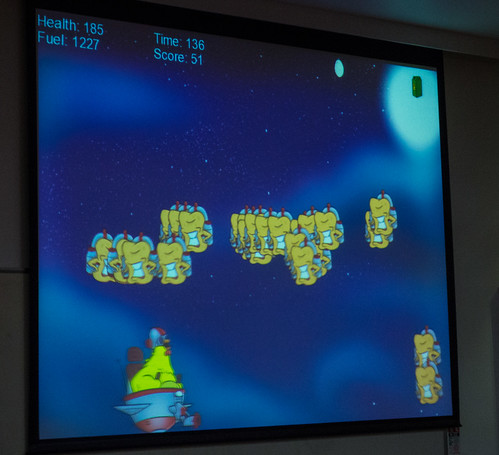
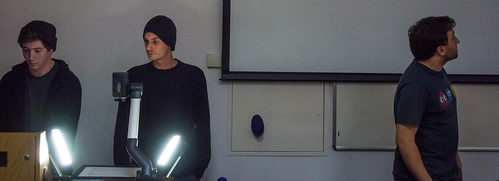
This team, the Cunning Stunts (careful how you say that) had made a game called “FlusterCluck” (careful how you say that too) starting from “Jetpack”, “sponge” and “chicken”. The chicken is the good guy, the sponges spawn at an amazing rate and after a few seconds things get very flustered indeed. Very good work from Jamie Hickman, Tom Richardson and Ricardo Real.
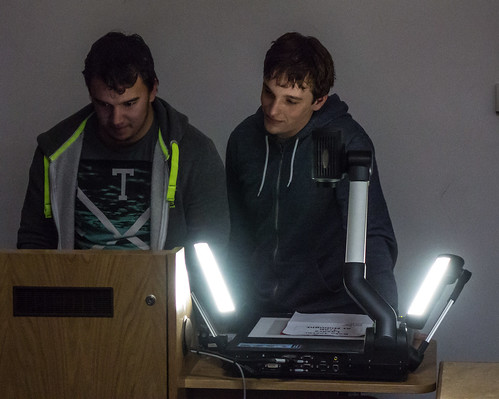
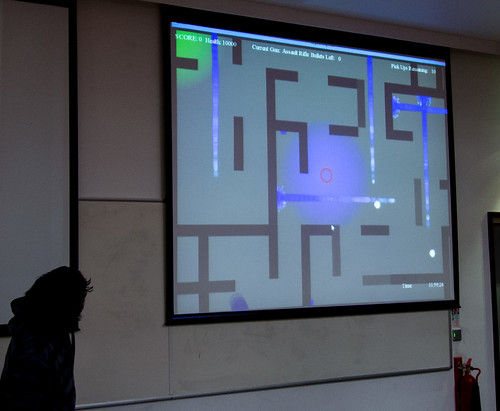
Betajester are another team of Three Thing Game stallwarts. And they used the skills they have acquired over the years to produce a frantic top down maze game from “Lasers”, “Trap” and “At Midnight”. We could see the traps, and the lasers, But we weren’t quite sure where the Midnight element fitted in. Then the clock clicked over, the screen went dark, the bad guys appeared and the whole game went manic. Great atmospheric fun (and good use of shaders) from Adam Boyne, Josh Porter and
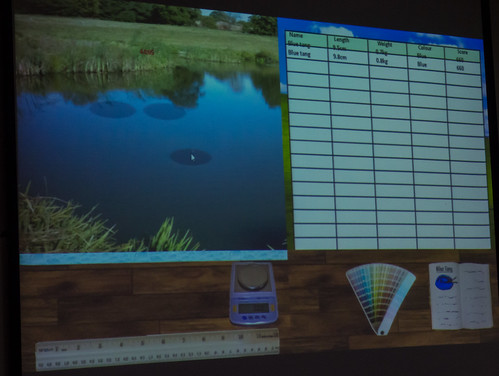
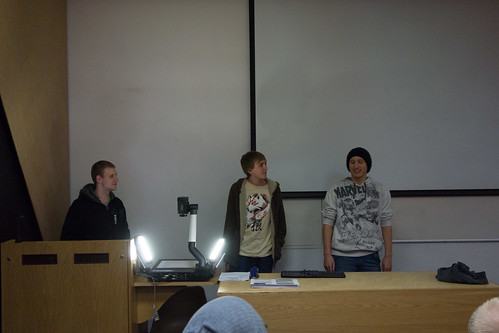
Team “88 Rob Miles Per Hour” had the less than enticing trio of “Database”, “Speed” and “goes fishing” as their things. But Daniel Pearson, Ben Redpath, Daniel Szczech and Chris Cawkwell stayed true to their theme and game up with a game that had you catching fish, measuring them and then entering the details into a database. All great fun and the best interpretation of things that I’ve seen in a long while.

So, after all nine had presented we got to the prizes. These three stayed around long enough to pick up their Third Place prizes. Well done to “88 Rob Miles Per Hour”. Their quirky gameplay and strict adherence to them got them into third.
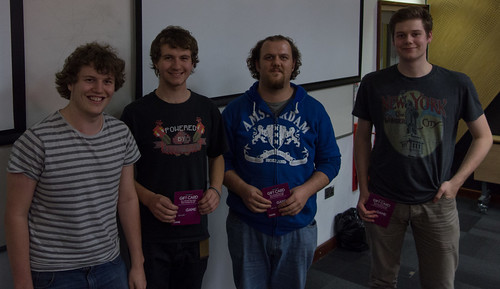
The “Rusty Spoons” stunning graphics and neat gameplay got them into Second Place.

Which left Betajester as the overall winners this time. They hit the theme well with an excellent piece of gameplay presentation with genuinely scary elements. Fantastic stuff.
One of the judges remarked on me that the standard gets higher each time we do this. I agree. Kudos to everyone who took part. If you didn’t make it to the end, no worries. The whole basis of “Three Thing Game” is that you learn what you can achieve in the time, pick up more skills and come round again. Stay tuned for Three Thing Game Spring 2014.
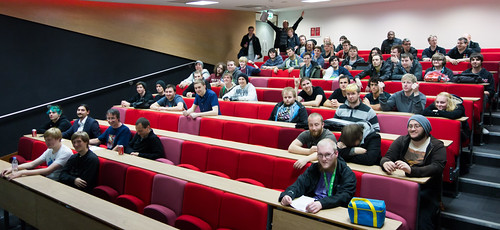
These are the survivors of the finals. Great work folks. Everyone who took part in the competition is awarded a Three Thing Game certificate. Contact me if you want yours.

We started the Three Thing Game competition today at 7:00pm. It’s going well so far. Around 140 students turned up who are keen to spend some time making games. At the moment everyone is sitting down and working on their game projects. We have a wide range of expertise, including some folks who have been programming for just a few weeks.
We stopped at around 8:30 for pizza and pop. We had 60 pizzas delivered in a mini-convoy and they were demolished by hungry developers in about 25 minutes flat. Many, many thanks to Microsoft who not only sponsored the pizzas today but also provided Lee Stott from the Technical Evangelist team who turned up to take a look and ended up helping me dish out the food. Lee was at an event a little further up north, but couldn’t resist heading home via Hull to see what was going on. He was telling me all about the new Imagine Cup competitions this year. Most interesting, and a great way to take your Three Thing Game experience onto the next level.
I’ve put loads of pictures on Flickr, you can find them here.
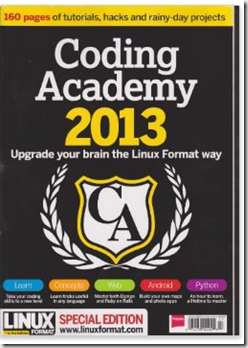
Computing is currently a bit fashionable, which is nice because there are loads of magazines of all flavours out there. And quite often a magazine will lump together a bunch of articles from previous issues and make a kind of “Greatest Hits” compilation. Linux Format has just done that and produced an edition it calls “Coding Academy 2013”.
It seems a bit expensive at 12.99 for what looks like a magazine, but when you consider that there are no advertisements it starts to look better value. There are introductions to Python, Ruby on Rails, Haskell, Scheme and Lisp along with features on Android development. It is all pretty well written, with examples and links to sample code.
If you have C# skills and are looking to find out the meaning behind some of the other words you hear bandied about when people talk computers you could do a lot worse than take a look. If you are complete beginner you might find the range of information a bit wide, but remember that you only have to learn one of these languages at a time.
I found my copy in the local newsagents, you can buy it online here.

What a great audience to get things wrong in front of….
I did the XNA Rather Useful Seminar today. Slightly enlivened by the fact that I finished the slide deck only a few minutes before the lecture itself. Oh well. Everything worked eventually…..

You might not know this (or perhaps even care) but I’m actually a member of a team taking part in Three Thing Game. I’m a part of the Spooky Elephant collective. I’m a sort of “sleeping partner” who doesn’t do much and then turns up to collect the prizes.
Works for me.
Anyhoo, David from our team was at the auction and managed to bag “walrus”, “custard” and “swimming” as the things we are going to have to make a game around. that sounds quite promising to me. But perhaps not as promising as “Team Bacon” who managed to get bread, cooking and,er, bacon. But you have to feel sorry for “The Elite Four” who managed to end up with “Rob Miles”, “Nuts” and “in a dress”. Who knows what they’ll come up with….
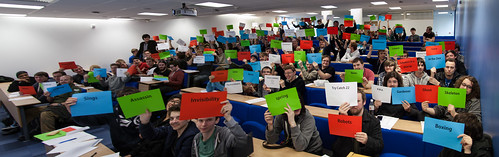
All the teams. All the things.
Sooooo. We had 41 teams and each of them needed Three Things. That’s well over 100 things to auction. In fifty minutes. And we did it.
By the end of the lecture we had a well oiled machine of David, Emily, Martin, Peter and myself who were clearing auction items at the rate of one every fifteen seconds. I’m not sure that everyone got all that they wanted but quite a few got some things. I was very pleased to see teams poring over the things for sale and strategizing before the auction. And the folks outside the lecture waiting to come in were amazed at what was going on.
For the teams, you now have three things. Make a game that involves them. It can be a new type of game, or a more traditional genre themed with the words that you have. Or just forget the things and make a space shooter. Anything goes.
I’m very pleased to be able to report that game developer Boss Alien will be sending some of their folks to take part in the event. They’ll be going round, looking at what is being built and giving helpful comments. They came along in June and enjoyed it so much they are coming back, which is great. They’ll be helping with the judging too.
Next date for your diaries is Wed. 30th NovemberOctober, at 1:15 pm. That’s when I’m doing an XNA overview which will cover how to get a game going and some things moving around the screen. It’s a Rather Useful Seminar and it’s in LTD as usual.
This is going to be so much fun.

Well, we’ve spent a sizeable chunk of the weekend printing and cutting out “Bank of Thingland” money, stuffing envelopes with notes, printing coloured things and generally getting ready for the Three Thing Game auction tomorrow that starts everything off. The auction is at 2:15 in Wilberforce Lecture Theatre 2 (WI-LT02). Should be fun.
This year, for a change, we are releasing some of the things that will be auctioned, so that you know what is coming up. You can find the list, along with the briefing document, here. If you find that I’ve spelt your name wrong in the team list (it happens) let me know and I’ll update the registration spread sheet.
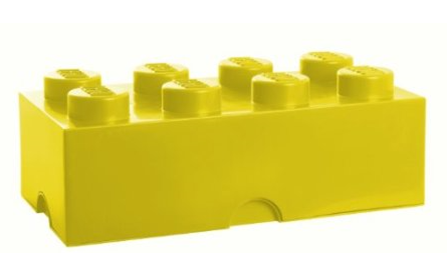
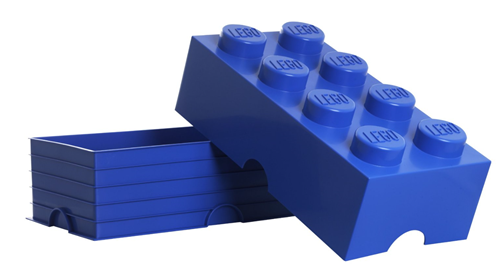
Just bought a bunch of these to put things in. They are great big Lego bricks, around 25cm x 50cm which you can put things in. And they fit together just like normal sized ones. So you can build a fort with them.
From the look of the reviews on Amazon they are very popular. Particularly with five year olds. But I like them too.
Rob Miles is technology author and educator who spent many years as a lecturer in Computer Science at the University of Hull. He is also a Microsoft Developer Technologies MVP. He is into technology, teaching and photography. He is the author of the World Famous C# Yellow Book and almost as handsome as he thinks he is.